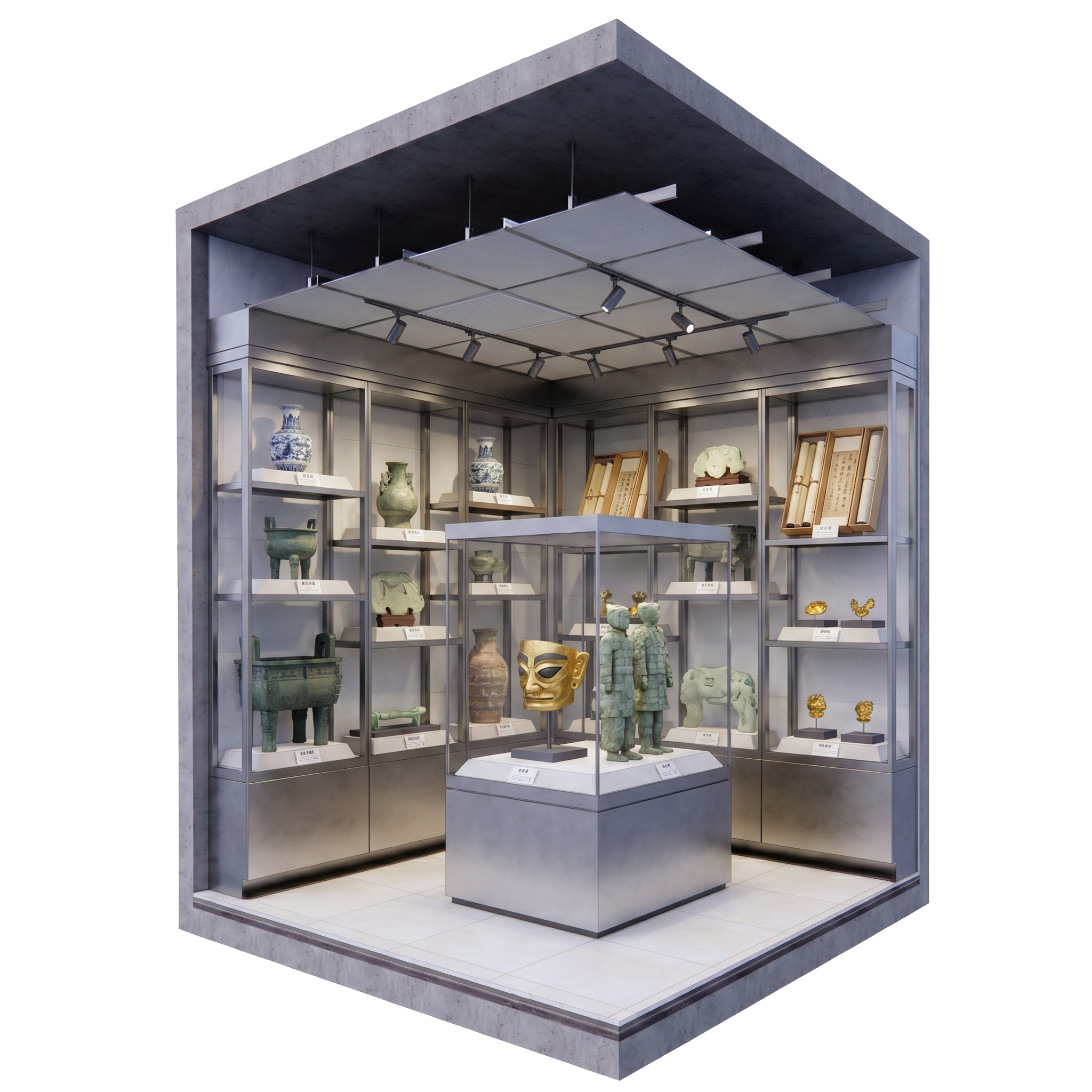
1. Conservation Standards for Cultural Relics
Humidity is the critical variable in museum conservation. Fluctuations in humidity cause far greater deformation of artifacts than temperature changes. For example, ivory exhibits less than 0.2% volumetric change under a 30 °C temperature variation, but a mere 10% fluctuation in relative humidity (RH) results in 0.4% expansion or contraction. Such dimensional shifts generate mechanical stresses that can lead to glaze cracking and pigment layer flaking. High humidity further accelerates “bronze disease,” electrochemical corrosion of iron, glass degradation, dye fading, paper fiber hydrolysis, and creates favorable conditions for microbial and insect infestations.
According to conservation suggestions, inorganic artifacts such as metal, glass, and enamel should be stored at 20 °C and 0–50% RH. Organic materials such as paper, textiles, wood, oil paintings, and ivory require 50–60% RH, while color film demands even stricter conditions of 0 °C and 40–50% RH. In all cases, daily RH fluctuation must not exceed ±5%, and daily temperature variation should remain within 2–5 °C.
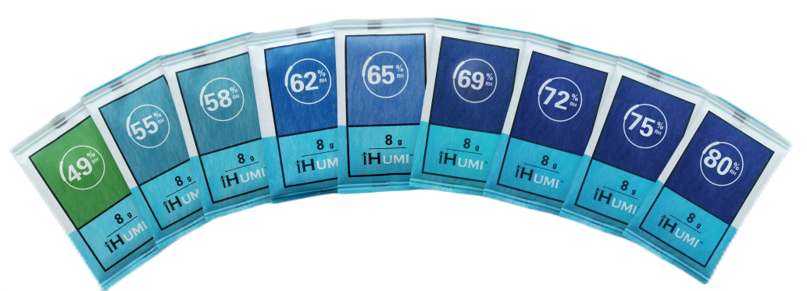
2. Challenges
The traditional approach has been to transform display cases into miniature clean rooms, with active systems such as humidifiers or HVAC units running continuously. However, exhibition halls are usually designed with structural load considerations, leaving limited ceiling, floor, and wall space for additional ductwork. New pipelines compromise visual integrity and drive up installation costs. Moreover, compressors, electrode humidifiers, and fans operating 24/7 consume significant energy, while start-stop cycles create transient peaks in temperature and humidity—invisible earthquakes from the perspective of delicate artifacts.
In 2018, China’s National Cultural Heritage Administration explicitly recommended the deployment of “passive humidity regulators” (Document No. 348). Yet conventional silica gel products present inherent limitations: their absorption and desorption capacity is only about 7.5% of their own weight. Before use, both the material and the display case must be pre-conditioned to the target humidity in a climate chamber, followed by a 24–48 hour equilibration period onsite. Even then, the actual performance deviation is ±10% RH. After high-temperature regeneration, more than 20% of the absorption sites are irreversibly lost, leading to performance degradation. The double pre-conditioning process, short service life, and large deviations have prevented silica gel from being widely adopted in precision conservation environments.
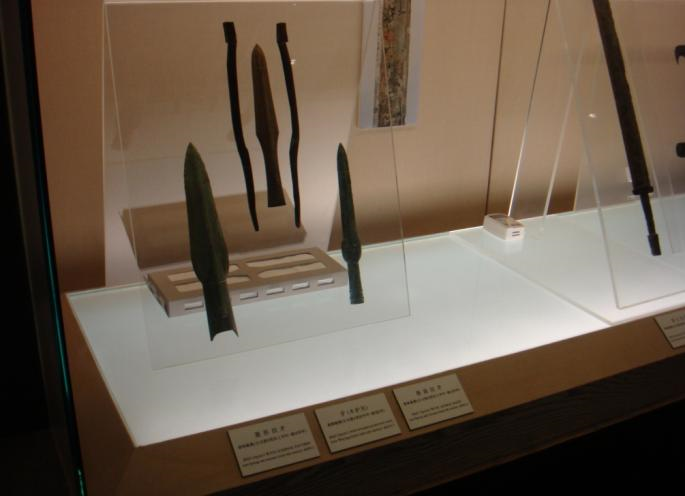
3. Solution — IHumi Fiber Humidity Regulator
The IHumi Fiber Humidity Regulator is made from natural plant fibers combined with polymer composites. It is safe, emission-free, and customizable for target values within the 30–80% RH range. With a moisture capacity of 16% of its own weight—double that of silica gel—it achieves regulation precision of ±3% RH, requiring no pre-conditioning and ready for immediate use. The material is produced in sheet form, which can be cut and concealed within the back panels, bases, or interior linings of display cases. Within just 30 minutes, it responds to sudden humidity changes, stabilizing fluctuations within ± 2% RH. This “invisible” passive control perfectly aligns with the four key requirements for humidity control materials: appropriate selection, full surface contact, timely replacement, and efficient micro-environment regulation.
Backed by integrated formula–product–process patents, IHumi overcomes the bottleneck of conventional silica gel, which requires pre-conditioning before use. By optimizing absorption–desorption mechanisms, it establishes a superior technical foundation. Within the critical RH range of 30–60% for artifact preservation, its capacity surpasses silica gel, providing a leading solution for passive precision humidity regulation.
Table 1 Moisture capacity of Artsorb(silica gel), Prosorb(silica gel) and IHumi across different humidity ranges
Humidity Range Artsorb Prosorb IHumi
RH30~40% 6% 6.30% 10.5%
RH40~50% 4% 7.90% 11%
RH50~60% 9% 8.40% 11.8%
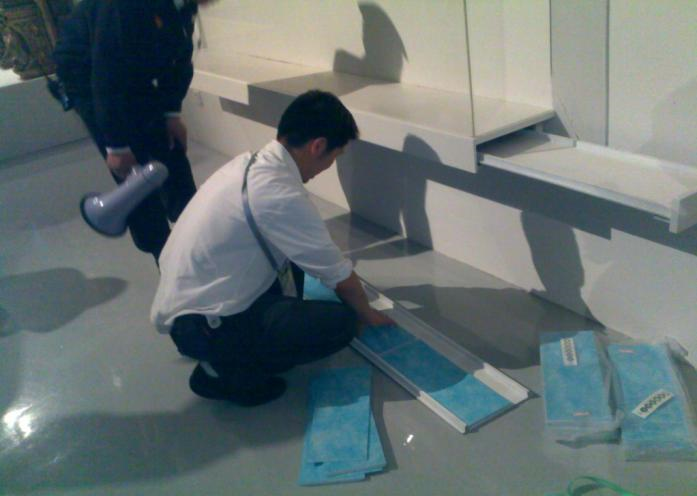
4. Applications and Deployment
At the 2010 Shanghai World Expo, IHumi Fiber Humidity Regulator was first adopted in display cases for bronze artifacts at the China Pavilion and oil paintings at the Mexico Pavilion. Since then, it has been widely introduced into institutions such as the National Museum of China and other cultural heritage organizations. Its use has significantly reduced the operating hours of mechanical climate-control equipment, lowered energy consumption in exhibition spaces, maintained narrow and stable humidity curves within cases, and enabled customized micro-environments precisely matched to the requirements of diverse artifacts.
5. Conclusion
The shift from active to passive humidity regulation not only reduces energy consumption and mechanical failure risks in conservation micro-environments but also aligns with the “dual carbon” strategy and green heritage conservation principles. As the IHumi Fiber Humidity Regulator is scaled across more storage and exhibition settings, passive precision humidity control is becoming the new norm in preventive conservation—providing sustainable humidity protection for the integrity and cultural value of artifacts across generations.
Copyright © 2026 Shanghai Hengyuan Macromolecular Materials co., Ltd. All rights reserved. - Privacy Policy

 EN
EN