
 EN

Lens fogging remains one of the most persistent challenges photographers, videographers, and industrial imaging professionals face when transitioning between temperature zones or working in humid environments. The phenomenon occurs when moisture condenses on glass surfaces, creating a temporary optical obstruction that degrades image quality and can damage sensitive coatings over time. Understanding how lens fogging develops and whether two-way humidity control can effectively prevent it is essential for anyone who depends on optical equipment for professional or critical applications.
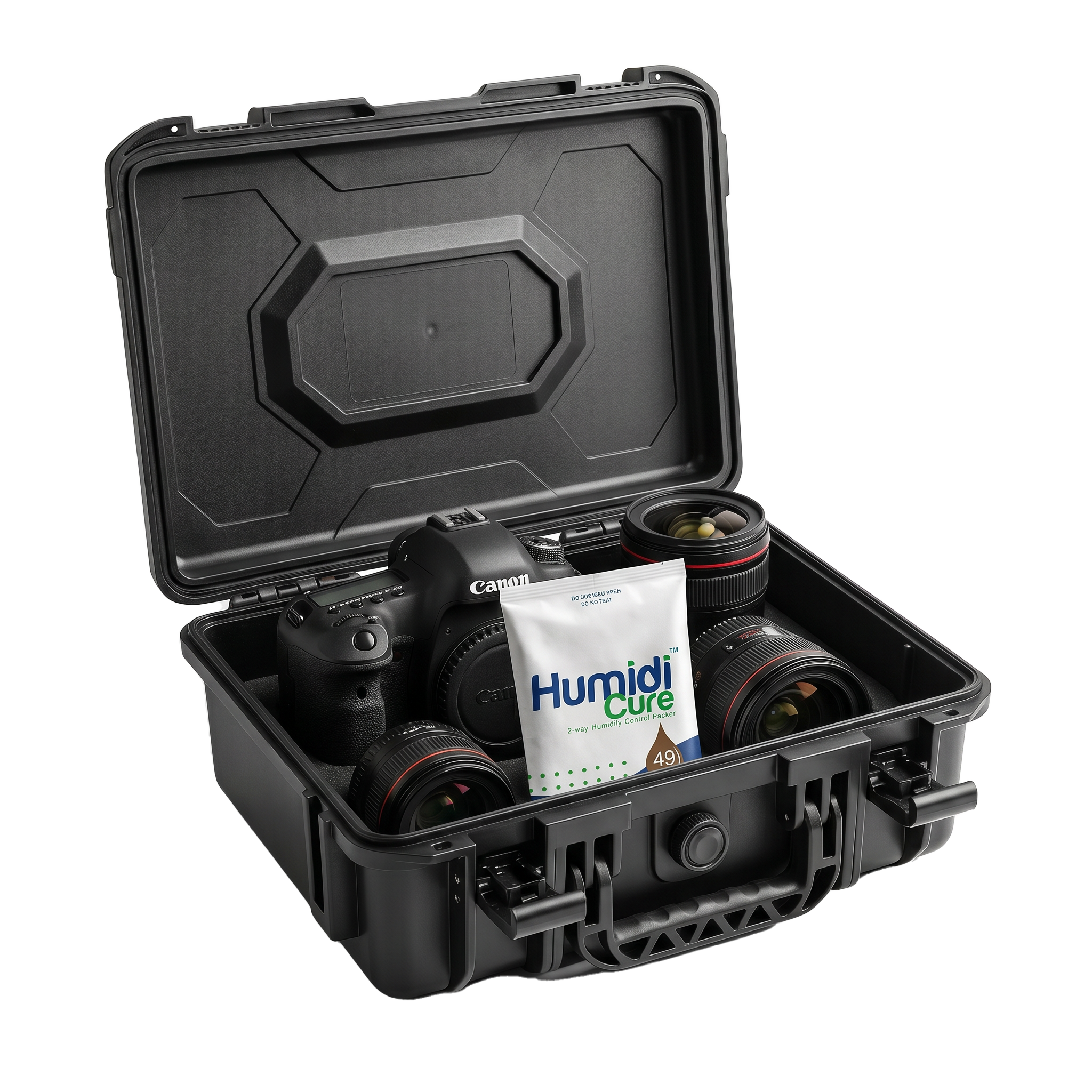
The answer is straightforward: yes, properly implemented two-way humidity control can significantly stabilize environmental conditions and prevent lens fogging. However, the effectiveness depends on understanding the root mechanics of moisture behavior, selecting the right control strategy, and maintaining consistent environmental parameters. This article explores how lens fogging occurs, why humidity control works as a solution, and what practical approaches deliver reliable protection for optical equipment.
Understanding the Mechanics of Lens Fogging and Moisture Behavior
How Temperature and Humidity Create the Perfect Fogging Conditions
Lens fogging happens when warm, moisture-laden air meets a cold optical surface. The air cannot hold as much moisture when cooled, so excess water vapor condenses directly onto the lens glass. This condensation layer acts as a diffusing medium, scattering light and reducing contrast, sharpness, and color accuracy in captured images. The problem intensifies when moving from heated indoor spaces into cold outdoor environments, or when equipment is retrieved from cold storage and exposed to warm, humid air.
The dew point—the temperature at which air becomes saturated with moisture—is the critical threshold. When a lens surface temperature drops below the ambient dew point, condensation becomes inevitable. In professional and industrial imaging, lens fogging can compromise critical documentation, surveillance footage, scientific measurements, and product inspection systems. Understanding this physics is the foundation for why lens fogging prevention requires active environmental management rather than passive protection alone.
Why Standard Protective Methods Fall Short
Lens caps and protective cases provide mechanical barriers but do not address the underlying humidity problem. A sealed lens case containing humid air will still develop lens fogging when the equipment temperature drops. Similarly, cleaning a fogged lens temporarily resolves the symptom, but if the environmental conditions remain uncontrolled, lens fogging reoccurs within minutes. These reactive approaches waste time and risk introducing dust or microfiber scratches during repeated cleaning cycles.
Effective lens fogging prevention requires addressing the root cause: uncontrolled humidity in the storage and operating environment. This is where two-way humidity control enters as a solution. By actively maintaining stable humidity levels within a defined range, lens fogging can be prevented before condensation ever forms on optical surfaces.
How Two-Way Humidity Control Prevents Lens Fogging
The Principle of Active Environmental Stabilization
Two-way humidity control systems maintain moisture levels within a narrow target band, typically between 35 and 55 percent relative humidity. This approach prevents lens fogging by reducing the amount of water vapor available to condense. Lower humidity means the air holds less moisture, raising the dew point closer to ambient temperature. When the dew point and surface temperature remain far apart, condensation cannot form, eliminating lens fogging entirely.
Active humidity control also stabilizes temperature fluctuations by reducing thermal stress on optical equipment. Many advanced systems combine dehumidification with gentle temperature regulation, creating a micro-environment where lens fogging becomes physically impossible. By keeping both humidity and temperature stable, these systems ensure that optical glass remains above the dew point under normal operating conditions, providing reliable protection without mechanical intervention.
Dehumidification and Moisture Removal Technologies
Modern two-way humidity control systems use various dehumidification methods to remove excess moisture. Desiccant-based dehumidifiers absorb water vapor using materials like silica gel or molecular sieves, then regenerate by applying heat to release trapped moisture. Electronic dehumidifiers use refrigerant cycles to cool air below its dew point, collecting condensed water that is then drained away. Each technology offers distinct advantages: desiccant systems work effectively in cold environments where traditional cooling struggles, while electronic systems handle high moisture loads efficiently in moderate temperature ranges.
The 'two-way' designation means these systems can also add controlled moisture if humidity drops too low, preventing damage from excessively dry environments. This bidirectional capability protects optical coatings and precision mechanical components, which can become brittle or develop lubricant degradation in very low humidity. By maintaining an optimal humidity sweet spot, lens fogging prevention becomes just one benefit of a comprehensive equipment protection strategy.
Practical Implementation of Humidity Control for Optical Equipment
Storage Environment Optimization
For equipment stored between use, dedicated environmental storage boxes equipped with built-in humidity control provide the most effective lens fogging prevention. These containers maintain stable internal conditions independently of external weather, temperature swings, or seasonal humidity changes. Professional imaging facilities and industrial inspection operations commonly deploy such systems for high-value lens collections, because the cost of equipment preservation far exceeds the investment in controlled storage.
The key is ensuring that stored optical equipment never experiences rapid temperature changes or humidity spikes that could trigger lens fogging during removal. With proper two-way humidity control, equipment removed from storage arrives at its operating environment already acclimated, eliminating the acclimatization period traditionally required before use. This capability is particularly valuable in field operations where time constraints make long warm-up periods impractical.
Active Operating Environment Control
Beyond storage, two-way humidity control can be integrated into laboratory settings, industrial imaging workstations, and surveillance installations. Fixed humidity control systems maintain optimal conditions throughout an entire workspace, ensuring that lens fogging never compromises optical performance regardless of external weather or seasonal changes. This approach protects not just cameras and lenses, but also other precision optical instruments like microscopes, projectors, and measurement devices.
Mobile imaging operations benefit from portable humidity control units that can be deployed on job sites. These systems stabilize the microclimate around optical equipment, preventing lens fogging even in challenging coastal, humid, or highly variable environments. By proactively managing humidity before equipment enters the field, operators eliminate downtime caused by fogging and maintain consistent image quality throughout long shooting sessions.
Advantages and Limitations of Two-Way Humidity Control for Lens Fogging
When Two-Way Humidity Control Delivers Maximum Benefit
Two-way humidity control works exceptionally well in environments where temperature and humidity fluctuate unpredictably. Photography studios, research laboratories, industrial inspection facilities, and archival storage rooms all benefit dramatically from lens fogging prevention through active environmental management. The return on investment becomes clear when considering the cost of lost productivity from equipment downtime, repeated cleaning cycles, and potential optical damage from condensation exposure.
Professional videography, thermal imaging, and scientific documentation applications face the highest costs from lens fogging incidents. A single session disrupted by condensation-related image quality loss can result in costly retakes or data loss. Two-way humidity control eliminates this risk by guaranteeing that lens fogging cannot occur within the controlled zone, enabling reliable operation and consistent deliverables.
Realistic Expectations and System Limitations
Two-way humidity control cannot prevent lens fogging on equipment exposed to extreme, uncontrolled external environments without transitional acclimatization. If optical equipment is moved directly from a freezing outdoor environment into a warm, humid building without gradual temperature adjustment, lens fogging will still occur during the transition period. However, proper acclimation—allowing equipment to reach ambient temperature within a controlled environment before exposure to operating conditions—eliminates this issue entirely.
System effectiveness also depends on maintenance and proper sealing of storage or operational spaces. A dehumidifier cannot maintain stable humidity if the environment is continuously exposed to large influxes of outside air. For field operations in highly humid climates, lens fogging prevention may require sealed containers or portable environmental units rather than relying on ambient humidity control alone. Understanding these practical constraints ensures realistic expectations and successful implementation of lens fogging prevention strategies.
FAQ
Can lens fogging damage camera lenses permanently?
Occasional lens fogging causes no permanent damage, but chronic exposure to condensation can degrade optical coatings and promote internal fungal growth or mineral deposits. Water droplets left on lens surfaces for extended periods can etch coatings or leave permanent residue. This is why preventing lens fogging through two-way humidity control is superior to accepting fogging as an inevitable operational challenge and cleaning lenses repeatedly.
How long does it take for two-way humidity control to prevent lens fogging?
Lens fogging prevention with two-way humidity control is immediate once the system achieves target humidity levels. Depending on the equipment type and starting conditions, stabilization typically occurs within hours to a few days. For stored equipment, lens fogging prevention begins as soon as the container reaches its target humidity range. For large facilities, achieving facility-wide lens fogging prevention may take longer, but localized protective zones can be established rapidly with portable systems.
What humidity level is optimal for preventing lens fogging?
The ideal humidity range for lens fogging prevention is 35 to 55 percent relative humidity. This range prevents condensation formation while protecting optical coatings and mechanical components from desiccant damage. Within this zone, optical equipment can transition between moderate temperature variations without triggering condensation. Different equipment types and storage durations may benefit from fine-tuning within this range, but this baseline provides reliable lens fogging prevention for most professional and industrial imaging applications.